
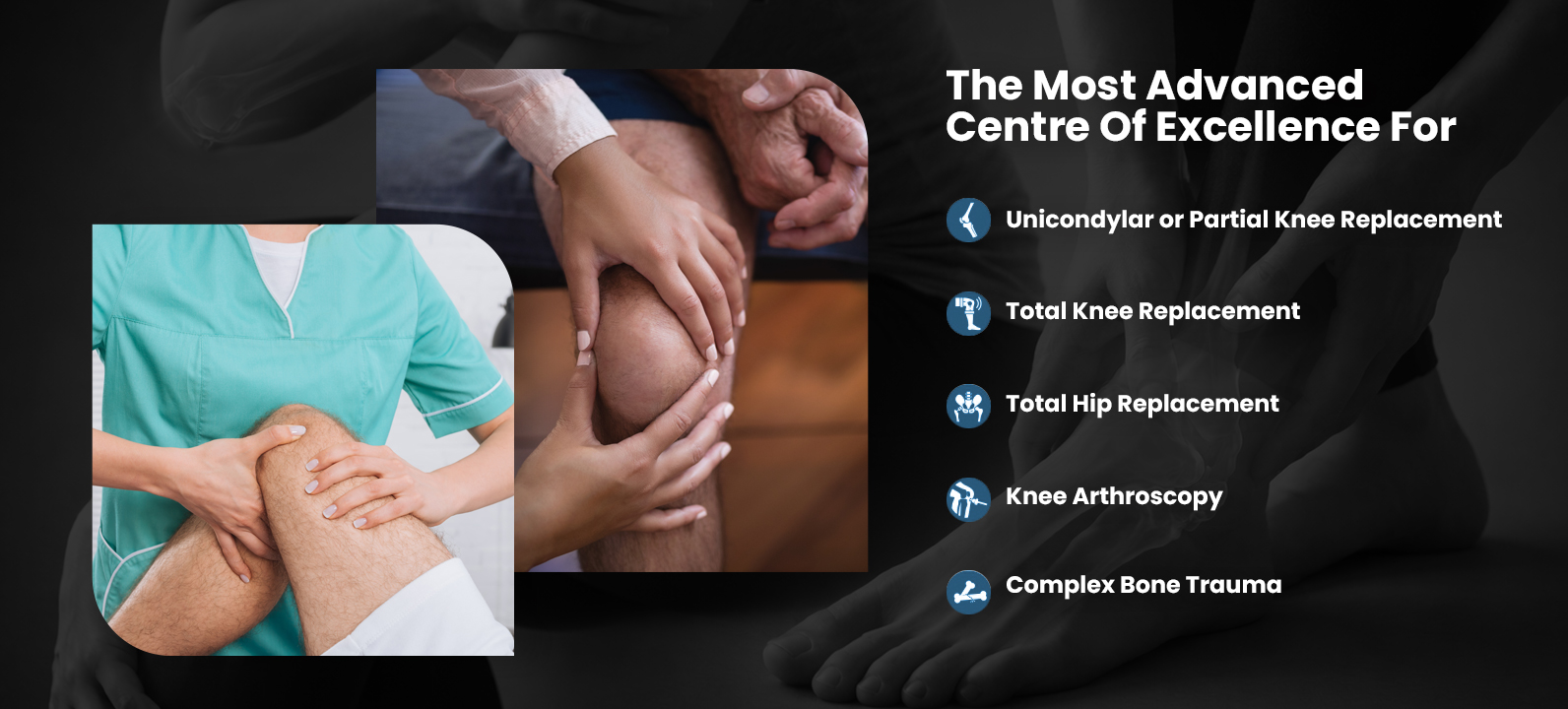
Partial Knee Pain? Preserve More of Your Knee with Unicondylar Knee Replacement in Ahmedabad
Not all knee arthritis requires a full knee replacement. If your arthritis is confined to one part of the knee, Unicondylar Knee Replacement may offer a less invasive solution with faster recovery and a more natural joint feel.
Dr. Dhiraj K. Marothi Jain, internationally fellowship-trained in the USA and UK, specializes in advanced Resurfacing (R2R Technique) Knee Replacement Surgery at Epic Multispeciality Hospital, Ahmedabad.
Advanced Knee Replacement Care
- R2R Resurfacing Technique
- Robotic & Precision Joint Replacement Expertise
- Focus on Early Recovery & Functional Mobility
- Personalized Treatment & Rehabilitation Guidance Common Symptoms
- Severe pain while walking or climbing stairs
- Knee stiffness and reduced movement
- Difficulty standing after sitting
- Disturbed sleep due to knee pain
- Advanced arthritis affecting daily routine Consultation Available At RACE Knee Clinic & Epic Multispeciality Hospital Ahmedabad
Could Unicondylar Replacement Be Right for You?
UKR is typically considered for patients who meet specific anatomical and clinical criteria.
Who May Need UKR?
- Pain primarily on one side of the knee
- Arthritis limited to one compartment on MRI or X-ray
- Active lifestyle with desire for faster return to activity
- Knee ligaments are intact and functional
- Pain not controlled with physiotherapy or injections
- Younger patient seeking to preserve bone for future procedures
Suitability Assessment Required
Unicondylar replacement is not suitable for every patient. Dr. Marothi will examine your knee, review your imaging, and assess your anatomy.
Based on your condition, he may recommend UKR, Total Knee Replacement, or a non-surgical treatment approach.
Unicondylar vs Total Knee Replacement — Understanding Your Options
Understanding the difference helps you choose the right treatment with expert guidance.
| Feature | Unicondylar (Partial) | Total Knee Replacement |
|---|---|---|
| Area Replaced | One compartment only | All three compartments |
| Bone Removed | Minimal | More extensive |
| Incision Size | Smaller | Larger |
| Recovery Time | Generally faster* | Standard timeline* |
| Joint Feel | More natural feel* | Designed to restore function |
| Suitable For | Localised arthritis | Widespread arthritis |
| Can be revised to TKR | Yes, if needed later | Not applicable |
*Comparison is general in nature. Your surgeon will determine which procedure is best suited for your anatomy and lifestyle.
What Makes Dr. Dhiraj Marothi Jain’s Technique Different?
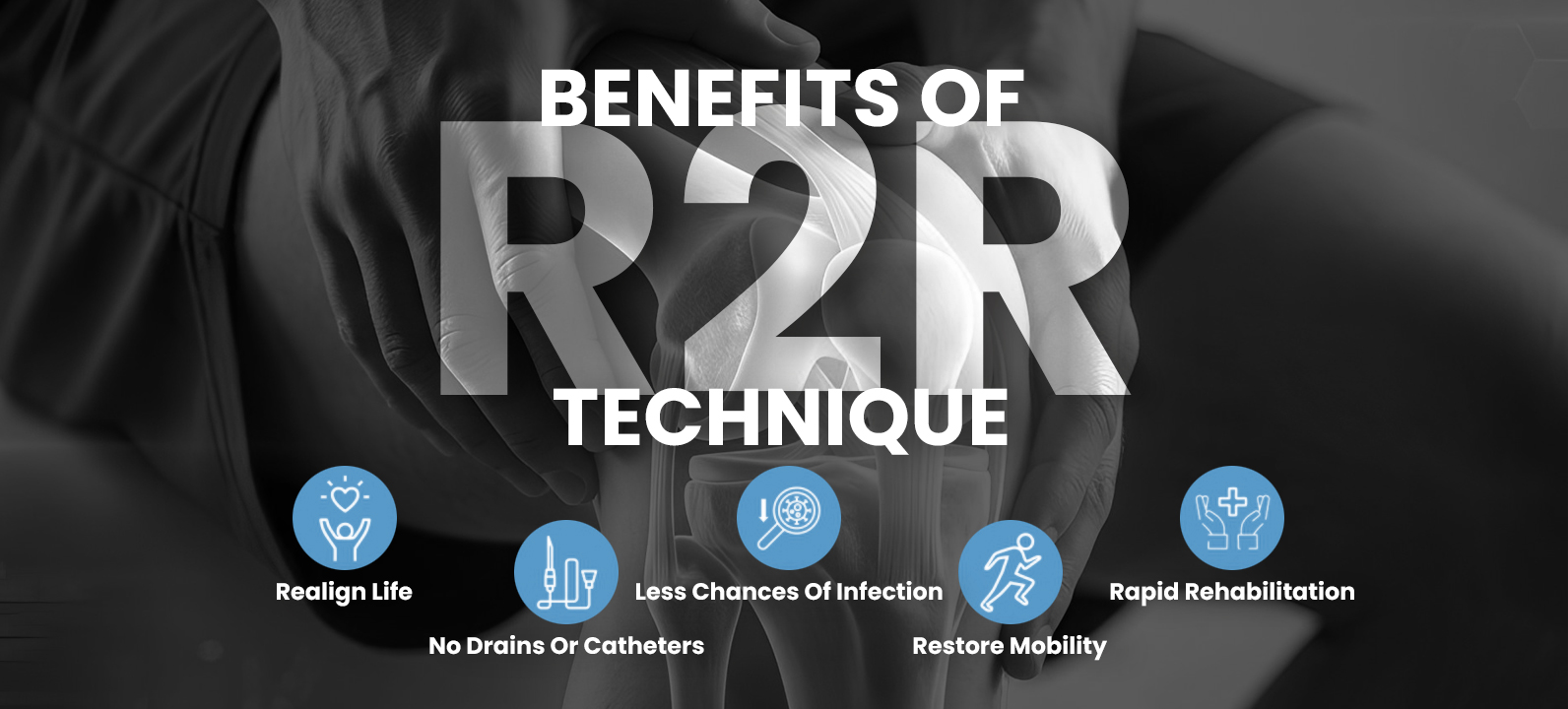
The R2R (Resurfacing to Recovery) Protocol is developed to enhance recovery, improve patient comfort, and achieve more natural knee function through precision-based knee replacement surgery.
- Less post-operative discomfort compared with traditional knee replacement methods
- Shorter surgical duration, helping minimise anaesthesia exposure
- Minimal tissue handling and limited surgical exposure
- Precise resurfacing of damaged bone and cartilage while preserving natural knee mechanics
- Advanced Medial Congruent / Medial Pivot implant philosophy designed to replicate natural knee movement and stability
- Routine use of drains and urinary catheters is generally avoided in suitable patients
- Early standing and assisted walking typically initiated within 24 hours after surgery
- Lower infection risk due to reduced operative time and streamlined surgical protocol
- Faster functional recovery with many suitable patients returning to regular daily activities within approximately 15 days
- Focus on balanced knee motion, improved confidence while walking, and enhanced patient satisfaction
*Recovery outcomes vary depending on patient age, medical condition, bone quality, body weight, rehabilitation participation, and overall post-operative compliance.
Your Step-by-Step Journey
Here is what patients can expect from consultation to recovery.
Consultation + Imaging
Knee examination, weight-bearing X-rays, MRI review, and ligament assessment.
Candidacy Confirmation
Dr. Marothi confirms UKR suitability and prepares a customised surgical plan.
Surgery
Partial resurfacing under anaesthesia with a smaller incision and R2R protocol.
Post-Op Day 1
Standing with physiotherapist support and pain management as prescribed.
Recovery
Walking aid progression and return to light activities within 2–3 weeks in suitable patients.
Frequently Asked Questions — Unicondylar Knee Replacement
Am I definitely a candidate for UKR?
Candidacy can only be confirmed after clinical examination and imaging review. Dr. Marothi will assess ligament integrity, arthritis distribution, BMI, and activity level.
Can unicondylar replacement be revised to total knee replacement later?
Yes. If arthritis progresses to other compartments in future, UKR can be revised to Total Knee Replacement.
Is UKR more expensive than TKR?
Costs vary based on implant type, hospital, and anaesthesia. The consultation team will provide a cost estimate before treatment.
How quickly can I walk after UKR?
Suitable UKR patients are typically standing within 24 hours and may progress to walking with support within the first few days.
What is the difference between UKR and knee resurfacing?
Unicondylar replacement treats one knee compartment, while knee resurfacing focuses on the kneecap and trochlear groove area.
Not Sure If You Need Partial or Total Replacement?
Dr. Marothi will give you a clear assessment of your knee and explain
the most suitable treatment options for your anatomy and lifestyle.
+91 9081977002 / +91 8511677003
Have a question? call us now
bestjointsurgeon@gmail.com
Need support? Drop us an email
Mon–Sat 09:00AM–08:00PM
Our Availability